Inside the Silence of the Waves: My Visit to Museum Tsunami Aceh
"I came to Museum Tsunami Aceh expecting history. I left carrying something heavier: the silence of names, the echo of water, and the memory of a city that survived the sea."
~3 - 5 Jam
Pagi hari (08:00 - 10:30)
Pusat Banda Aceh / Akses Transit Utama
Entering a Place Built from Memory
I arrived at Museum Tsunami Aceh in Banda Aceh under a bright sky, the kind of morning that made everything seem ordinary. It was difficult to imagine that this peaceful city had once been swallowed by one of the deadliest waves in history.
The museum was built to remember the 2004 Indian Ocean tsunami, but standing in front of it, the building itself already felt like a message. The architecture was strong yet flowing, as if concrete had learned how to imitate water. It was beautiful, but not in a comfortable way. It carried weight.
I had seen photos before, but they did not prepare me for what it felt like to step inside.
Walking Through the Dark Corridor
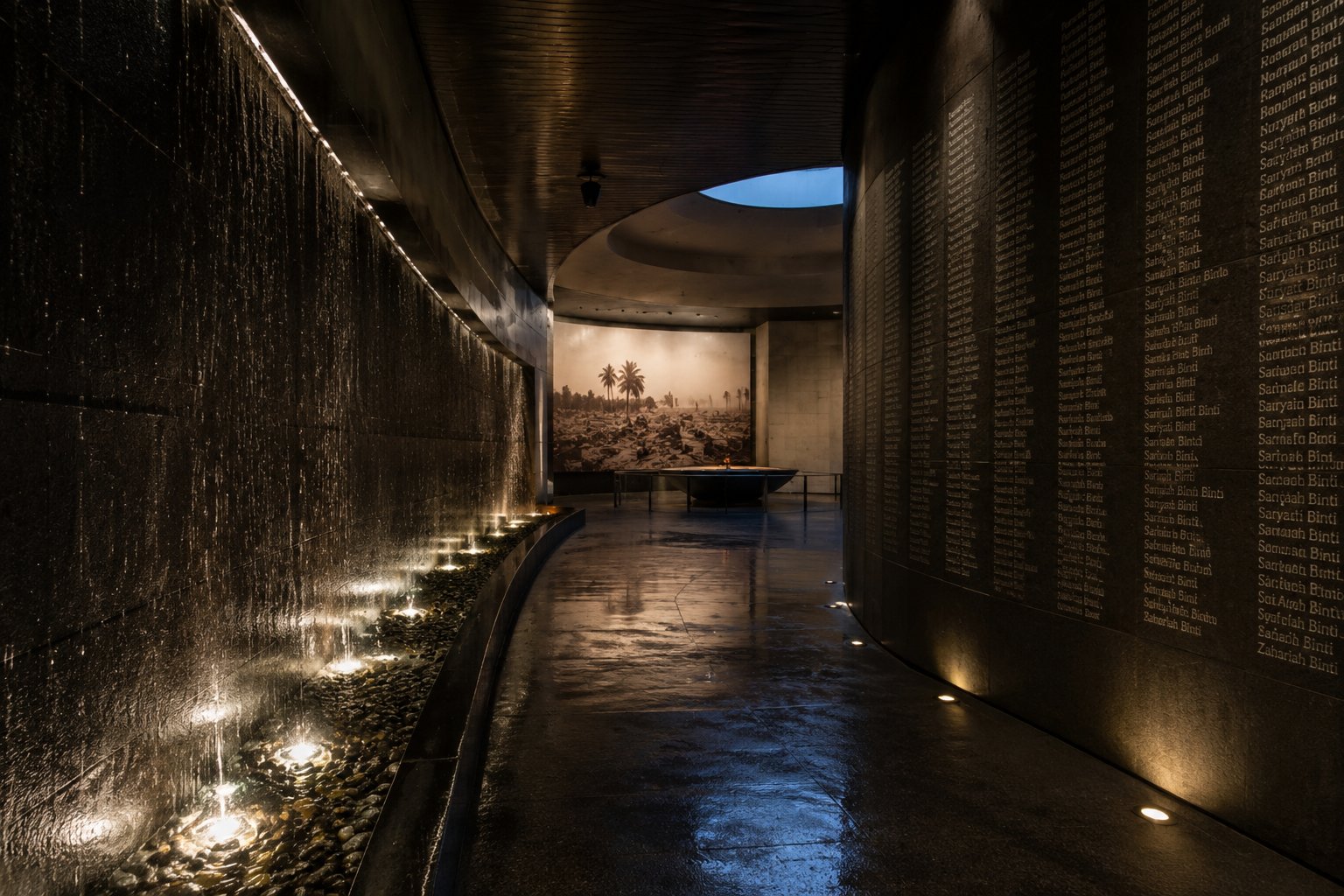
The first thing I entered was the narrow dark corridor. The walls were tall and close. Water dripped from both sides, falling endlessly, and the sound filled the passage like a distant storm.
The Sound of Water That Changed Everything
At first, it was only water. Just drops hitting stone. But after a few steps, it became impossible to ignore what those sounds represented.
I slowed down. The corridor was dim, almost without light. The dripping echoed in every direction, and for a moment I forgot I was in a museum. It felt like walking into someone else’s final memory.
The design was simple, but it reached somewhere words could not.
The Hall of Names
Further inside, I entered one of the memorial spaces. The walls carried names of people who never returned after the wave. There were so many that reading even a few felt overwhelming.
Every Name Was a Story
I stood still longer than I expected.
Each name looked small on the wall, but behind every one was a home, a voice, a meal unfinished, a morning interrupted forever. The room was quiet, and somehow that silence made everything louder.
No one spoke. Visitors moved slowly. Some read. Some simply stared.
I found myself doing neither. I was only standing there, trying to understand a grief too large for one building to contain.
A Museum That Does Not Feel Like a Museum
Museum Tsunami Aceh is not just an exhibition space. It feels like architecture designed to carry sorrow without hiding it.
Designed to Remember, Not to Impress
The exhibits include photos, videos, and historical explanations, but the building itself tells the story before any display does.
The dark tunnel, the water sounds, the circular chamber of light, the prayer-like silence in the memorial hall every part leads you deeper into the emotional reality of what happened in 2004.
It does not rely on dramatic effects. It relies on absence. On echoes. On the things that are no longer here.
Leaving with a Different Kind of Quiet
When I walked back outside, the sun was still shining. Cars moved. People talked. Daily life continued around the museum as if nothing had happened.
But something inside me had changed.
The Sea Leaves More Than Water
I came to learn about a disaster. I left thinking about resilience.
Museum Tsunami Aceh reminded me that some places are not visited to be entertained. They are visited to remember what humans can lose and how they continue anyway.
I looked at the sky before leaving. It was calm. The city was calm.
And yet somewhere beneath that ordinary afternoon, the memory of the sea was still alive.
Cerita ini dikurasi dan diverifikasi sesuai Standar Pedoman Komunitas & Editorial PT Locallytrip Teknologi Indonesia.
Beri inspirasi ke sesama traveler! 🌍
Bagikan cerita otentik ini ke media sosial favoritmu dalam sekali klik.